Efficiency with Long-Term Vision
The world’s poultry sector supports millions of people throughout the year, but it is increasingly under threat due to disease outbreaks, rising prices of feed, and climate change unpredictability. The farmers cannot simply continue depending on assumptions and physical inspections to ensure good health and profitability of their flock. Smart poultry farming provides an answer by introducing new solutions to the existing problems.
Why the Industry Needs a New Approach
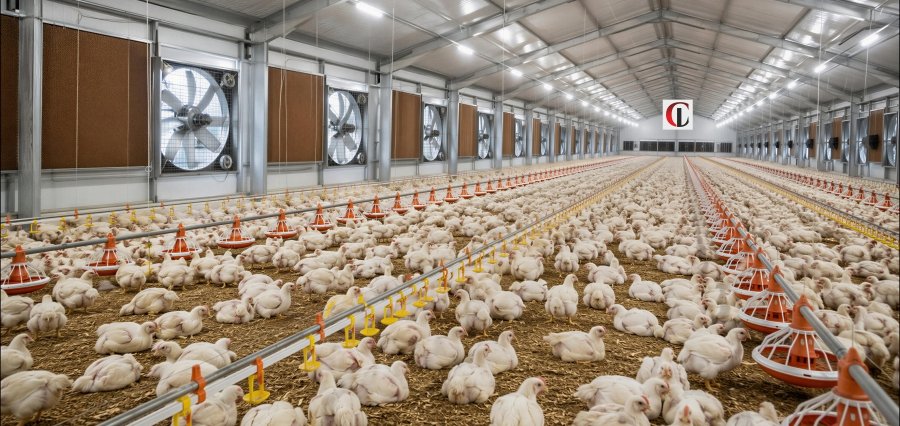
Poultry farms in the traditional format rely highly on the use of labor. People walk the barns multiple times a day to gauge the temperature and humidity along with observing the birds manually. This takes up time and is prone to errors. A sharp increase in the amount of ammonia present or even failure in the ventilation fans could take hours before being observed, thus jeopardizing the health of the large number of birds. Smart poultry farming solves such issues through the inclusion of sensors within the barns.
How Technology Transforms Daily Operations
Sensors monitor temperature, humidity, carbon dioxide, and ammonia, sending an alarm immediately whenever the numbers deviate from the acceptable range. Feeding and watering become automatic and depend on age and feeding habits of the flock, saving food and increasing the efficiency of conversion of the consumed food into weight gain. The cameras with artificial intelligence assess the birds’ activity and postures, thus spotting the symptoms of disease and stress before these become visible to people. The information received is not just collected but also acted upon through the automatic change in ventilation or doses of medication. A farmer is able to control several barns from a single phone, saving time previously spent walking among barns and concentrating on what is really important.
Apart from daily monitoring, this technology impacts the planning process. The historical information helps farmers to estimate harvest weight and foresee the likelihood of certain diseases depending on seasons and to determine the right dates for breeding. Insurance companies and suppliers want such information nowadays.
A Real-World Case in Practice
Indonesia has been successful in deploying an IoT-based solution through a joint venture between telecommunications company XL Axiata and Sierad Produce, a leading poultry firm. The IoT system helps monitor environmental factors and provides an automated way to distribute feeds and water on the farms. It is possible for the farm managers to track any inefficiency in the utilization of resources through the use of the technology. As per the claims by XL Axiata, there has been an improvement in the efficiency of feed and water utilization, resulting in healthier poultry birds and better production.
Building Resilience Against Future Shocks
Climate fluctuations and diseases such as avian flu continue to pose persistent risks to poultry farming around the globe. The ability of Smart Poultry Farming to create sustainable operations comes from ensuring farmers have the early warning mechanisms required to contain these issues before they spread. Biosecurity systems that automate checks along with sensors that help to identify any anomalies in bird behavior ensure that farms are able to contain any outbreaks within hours.
This is important since it helps to save one barn and not lose the whole farm. Sustainable practices are also aided through this technology since precision feeding will eliminate waste, while smart climate control reduces energy use. Data-informed breeding also helps to make sure that production leaves minimal impact on the environment. There is an increasing pressure for information on how food products are made, and technology allows for this to be achieved.
The Road Ahead
The issues of adoption barriers should not be ignored. High initial expenses for installation, internet accessibility issues in the rural areas, and the learning curve for small poultry farms prevent this technological revolution from happening at full speed. Cooperation between governments and technology providers should be considered in order to ensure accessibility of the above-mentioned innovations for small poultry farms.
In spite of those barriers, progress is unstoppable. As the market of feed faces constant price changes and risks of diseases increase, the idea of Smart Poultry Farming becomes increasingly relevant. Those producers who use modern technologies will cope with any crisis situations easily while others cannot do that. It is clear that the key to a successful future in the poultry industry is connected with the implementation of the mentioned technologies. Those farms which choose to implement modern technological solutions today will succeed in the future.