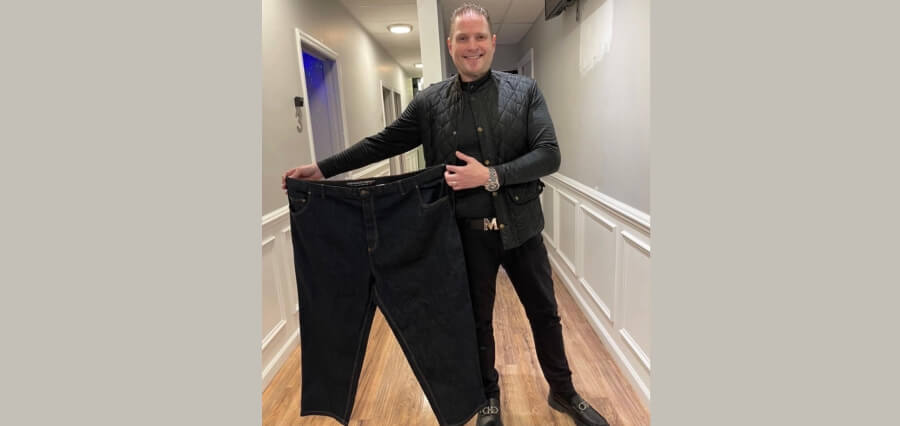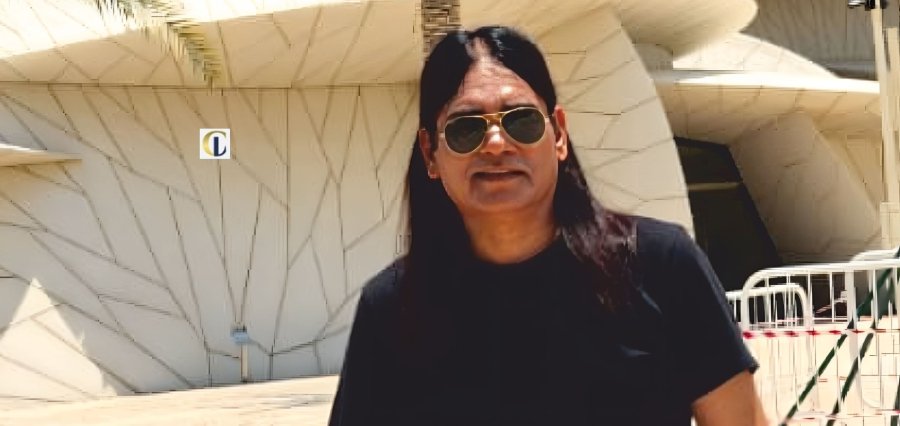
Over the last thirty years, Dr. Dhirendra Kumar has dedicated himself to a field that never stands still. He has walked around poultry farms, sat with worried farmers, handled disease crises, advised companies, managed teams, scaled mountains and participated in motorsport rally events. One question accompanies all of these endeavours.
“Is there a better way to do this?” he wonders.
That one question defines his entire professional self. His tale is not only one of poultry science. Rather, it is a tale of the people involved, of difficulties encountered and overcome on the ground, and of the quest for solutions that really work. What makes this story fascinating is not just where he has ended up, but how many paths he has taken to get there. Currently he works as a Poultry Consultant at D K Consultations. A single philosophy anchors Dr. Kumar’s career: Farmers First- Always 1st. He treats it as more than a motto. It shapes how he evaluates poultry products, technical solutions and business decisions alike.
He insists that any technical response must begin with a genuine understanding of the farmer’s problem, whether that problem involves disease, nutrition, management, biosecurity or farm economics. This conviction has carried through every stage of his career, from his early fieldwork with poultry farmers to his consulting practice and, later, his role as Technical Advisor and President of Vesper Group.
“The real problem must be identified before the solution is even discussed,” he says, describing the discipline he applies to every recommendation.
For him, a technical recommendation earns its value only when it works where it matters most on the farm. As poultry production has grown more complex, with shifting disease patterns, rising feed costs, market pressure and increasingly sophisticated systems, he has held firmly to the belief that the farmer stands at the centre of the entire poultry ecosystem, not merely at its edge.
A Foundation Built in Veterinary Science
Dr. Kumar’s professional foundation was laid early. After finishing school at Kendriya Vidyalaya, Hebbal, Bangalore, he completed his B.V.Sc. from Bangalore Veterinary College, followed by a Postgraduate Diploma in Feed Manufacturing Technology from Namakkal Veterinary College. He began his career in 1991 and joined Venkateshwara Hatcheries Ltd. in 1992 as a Field Veterinary Officer in the Barwala area of Chandigarh.
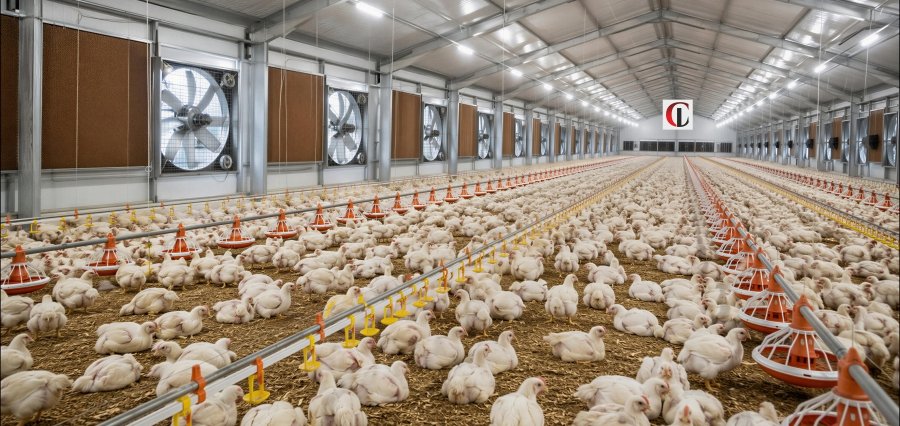
Those early years placed him directly in the field rather than behind a desk. He travelled between farms, observed birds closely, and listened to farmers describe problems that rarely matched textbook descriptions. A textbook, he learned, can explain symptoms, nutritional requirements and vaccination principles, but only fieldwork teaches a professional to recognise what happens when several problems converge at once.
He trained himself to read an entire farm environment- litter condition, water quality, ventilation, feed storage, worker routines because a complicated problem often traces back to something simple. That habit of looking beyond the obvious has stayed with him throughout his career, along with a conviction he still repeats today.
“Scientific knowledge is valuable only when it can be translated into something practical for the farmer,” he says.
From Field Experience to D K Consultations
In 1997, Dr. Kumar founded D K Consultations to bring practical guidance on farm establishment, vaccination, disinfection, management and disease control directly to poultry farmers. What began as consulting work in North India expanded steadily, and by 2014 his practice had grown to a Pan-India scale, touching nearly one crore layers, more than 80 lakh broilers and five feed mills.
Yet Dhirendra insists the figures capture only part of the story. Every farm presents different climate conditions, infrastructure, disease pressure and management practices, so a solution proven in one location must often be reshaped for another. This is why he always investigates a situation before recommending a fix, asking what changed, when it changed, and what made this particular farm different. Three decades of exposure to varied farms and disease situations have given him a pattern-recognition ability that experience alone can build. He has seen production drops that had nothing to do with feed, and outbreaks that did not begin with disease at all reminders that technical professionals must learn to ask questions before offering answers.
Learning Directly from the Field
Prevention runs through everything Dr. Kumar practises. He treats biosecurity not as an emergency response but as a daily discipline covering farm entry controls, sanitation, vaccination, movement management, and feed and water hygiene. Technical knowledge alone does not change behaviour on a farm, he argues; farmers must understand why a practice matters before they commit to it consistently.
Every disease outbreak, in his view, also carries a lesson. Once an immediate crisis is controlled, he pushes his teams to examine what caused it a biosecurity gap, a vaccination lapse, a management oversight, or a change in feed or water. That habit of asking “why” rather than simply reacting has shaped his belief that the industry needs professionals capable of building healthier, more resilient farms rather than solving one problem at a time.
The Farmer Relationship
For Dr. Kumar, consulting has never been only about issuing recommendations; it has always been about building trust. Farmers hesitate before abandoning established practices, and that hesitation is reasonable. Trust develops slowly, through consistency, availability, clear explanation and honest follow-up on results. Over time, the relationship becomes reciprocal: the consultant offers technical knowledge while the farmer contributes practical, ground-level experience.
“The farmer is a partner in finding the right solution,” he says, and that belief brings his philosophy full circle: Farmers First, Always 1st.
An Industry That Never Stops Changing
Feed costs, disease pressures, farming systems, technology and customer expectations have all shifted considerably across Dr. Kumar’s career, making continuous learning a professional responsibility rather than an option. He continues to treat farmers as some of the industry’s best teachers. Nutrition illustrates his thinking well: reducing feed cost does not automatically improve profitability, since the real question concerns the balance between cost, nutritional value, bird performance and overall farm economics. The same logic applies to disease control, where medication cannot substitute for sound management and prevention.
More Than a Technical Role
As his career advanced, Dr. Kumar’s responsibilities expanded beyond veterinary consulting into sales, marketing and exports, forcing him to develop an entirely different skill set. Technical soundness tells only part of the story; understanding what a customer truly needs, how a product fits farm economics, and how technical value gets communicated required new thinking. This transition reinforced a belief that has stayed with him since: technical excellence and commercial understanding are not opposing forces. Built around genuine customer needs, they reinforce each other, making both the product and the business more sustainable.
A New Chapter with Vesper Group
In 2020, Dr. Kumar joined Vesper Group as Technical Advisor and President, taking on technical advisory responsibilities alongside sales, marketing across India and the company’s export business. The role drew together decades of field experience with a broader commercial perspective, allowing him to see how technical knowledge, business strategy and customer requirements operate as a connected system rather than as separate functions. He continues to carry the voice of the farm into every business decision.
The Philosophy Behind a Product
Dr. Kumar insists that a product must begin with a genuine problem, not a sales target. He works backward from the farmer’s actual challenge performance, nutrition, disease pressure, feed efficiency, farm economics or management before deciding whether an intervention can address it. This reframes the guiding question away from “how do we sell this product” toward where the product can create real value. A farmer ultimately judges a solution by its results, and credibility earned through results becomes the strongest foundation for a lasting relationship which is precisely why Farmers First, Always 1st remains more than a slogan for him.
Bridging Science and the Farm
Dr. Kumar has spent much of his career narrowing the gap between scientific research and practical farm implementation. Research findings, he argues, only realise their value once translated into something usable by someone working with birds every day, and technical professionals carry the responsibility of building that bridge. He believes the future of poultry depends less on generating new knowledge and more on converting existing knowledge into action.
Continuous Learning and Leadership
Bird genetics, nutrition science, vaccination strategy, farm automation and disease surveillance have all transformed since Dr. Kumar entered the industry in the early 1990s, reinforcing his conviction that experience without continuous learning eventually goes stale. He treats curiosity as an essential professional quality, describing it as the willingness to ask questions, explore new ideas and challenge one’s own assumptions. Leadership, in his framing, is not a designation but a responsibility that demands judgement under uncertainty listening, analysing and learning from outcomes even when information is incomplete or circumstances demand a quick decision. His progression from field veterinarian to consultant, technical advisor and business leader reflects that gradual accumulation of perspective: the field taught him observation, consulting taught him problem-solving, and business taught him strategy, with leadership eventually bringing all three together.
Beyond Poultry
Dr. Kumar’s interests extend well past veterinary science. He has undertaken expeditions to Kibber and Marshimik La, holds three Limca Book of Records certificates, has reached Everest Base Camp, and has competed as a motorsport rally driver in Himalayan rallies and championships. These pursuits share an unmistakable thread with his professional life they all demand preparation, adaptability and composure when conditions shift unexpectedly. Stepping repeatedly outside comfortable territory, he believes, is what produces real growth, professionally and personally alike.
Recognition Along the Journey
His contributions have earned the Best Poultry Consultant Award in 2013, the Best Technical Service Provider Award in 2017, the Dr Devegowda Excellence Award in 2022, and the Best Poultry Physician Award in 2024. Yet Dr. Kumar does not treat these honours as his ultimate measure of success. For him, the more satisfying moments remain simpler a farmer implementing advice, a flock performing better, a disease problem resolved, a farmer returning because earlier guidance delivered genuine value.
A Message for Young Professionals
Dr. Kumar urges young veterinarians to build knowledge and credibility before chasing recognition. He wants them to spend time in the field, observe birds carefully, talk to farmers, and understand a farm before attempting to solve its problems. Academic knowledge matters, but the ability to apply it in real situations matters equally. He also stresses integrity, reminding young professionals that a single technical recommendation can affect a farmer’s livelihood and the health of thousands of birds, so advice must rest on genuine need rather than commercial convenience. Trust, he reminds them, takes years to build and can disappear quickly.
Poultry as a Complete Ecosystem
Dr. Kumar views modern poultry production as an interconnected system in which bird health, nutrition, economics, market conditions and sustainability cannot be separated from one another. The industry’s objective, in his assessment, has shifted from simply producing more to producing efficiently, responsibly and sustainably a balance he sees as achievable only when scientific advancement and practical economics move together.
What Lies Ahead
Looking toward 2026 and beyond, Dr. Kumar expects data-driven decision-making, precision nutrition, improved flock monitoring and disease surveillance to play an increasingly central role in poultry production. He does not, however, believe technology should replace human experience.
“Technology can provide better information. Experience helps us understand what that information means in the real world,” he says.
He also expects technical professionals to keep bridging the gap between research and farm-level implementation, positioning India’s poultry sector to combine science, technology, field experience and business understanding more effectively than before.
Continuing the Journey
Dr. Kumar’s path from veterinary education to field practice, from Venkateshwara Hatcheries to D K Consultations, from individual farm consulting to Pan-India technical work, and now to his broader responsibilities at Vesper Group continues to evolve. He hopes to see India’s poultry sector grow more scientific, professional, technologically advanced and disease-resilient while remaining economically sustainable for farmers, and he considers developing the next generation of professionals central to that future. New diseases, new technologies, new markets, new products and new farmers will all demand attention, and he sees the real challenge as staying curious enough to keep learning and practical enough to keep applying what has been learned.
For Dr. Kumar, real experience is not simply about knowing more; it is about knowing how to use what one knows when it matters most. Transformation in this industry rarely arrives through a single breakthrough. It happens one farm, one problem, one farmer and one lesson at a time — driven, always, by the same question that has guided his career from the start.
“Can this be done better?” That question continues to drive Dr. Dhirendra Kumar forward, anchored throughout by one enduring principle: Farmers First — Always 1st.