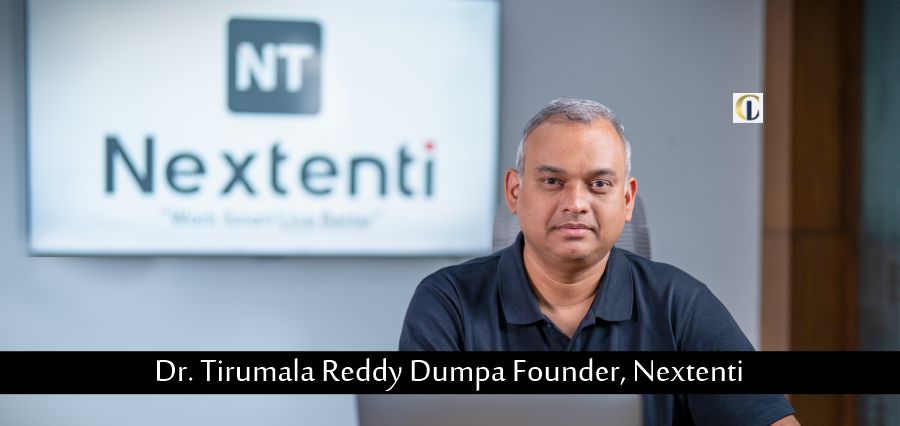
Written By: Dr. Tirumala Reddy, Founder, Nexenti
The healthcare sector represents one of the fastest-growing industries globally, encompassing a wide range of entities including hospitals, clinics, diagnostic laboratories, research centers, pharmacy chains, pharmaceutical manufacturers, HealthTech companies, public health organizations, and medical equipment providers. Recent years have seen an increased demand for skilled professionals in both global and Indian healthcare markets, influenced by an aging population, changing disease patterns, technological advancements, and a heightened emphasis on public health following the pandemic. This article presents a thorough analysis of global and Indian healthcare employment trends, significant challenges, and emerging opportunities.
Global Outlook: Growth, Gaps, and Drivers
In 2020, the global healthcare workforce comprised around 65 million professionals spanning various specialties. According to the WHO and recent World Bank labor analysis, this workforce is projected to grow to approximately 84 million by 2030, representing a 29% increase over the decade, which is significantly faster than the overall population growth rate. This increasing trend is driven by multiple factors:
- Aging populations in both developing and developed nations are leading to a rise in elderly individuals requiring chronic and specialized care, thereby driving job growth in geriatrics, rehabilitation, nursing, and home healthcare sectors.
- Technological advancements in digital health, telemedicine, and advanced diagnostics are generating new technical roles and heightening the demand for healthcare professionals with digital literacy.
- Policy changes are facilitating a shift towards preventive and public health, resulting in expanded roles in public health, epidemiology, health analytics, and wellness management.
- Pandemic recovery and preparedness: The COVID-19 pandemic revealed deficiencies in the healthcare workforce and prompted global investments in recruitment, training, and surge capacity.
Regional Disparities and International Opportunities
Despite significant growth, pronounced regional disparities persist. In high-income countries, healthcare employment constitutes approximately 20% of total jobs, while in lower-income nations, this percentage ranges from 4% to 7%. The projected global shortage is estimated between 10 to 15 million health workers by 2030, with shortages acutely felt in Africa, Eastern Mediterranean, and lower-income Asian countries. These gaps open substantial international opportunities for healthcare professionals, as high-income countries look abroad to source talent, creating pathways for skilled migration, international training, and remote/virtual clinical services.
India’s Expanding Healthcare Sector
India stands out as one of the fastest-growing healthcare economies, driven by a blend of government investment, private sector expansion, and population health needs.
- Employs over 7.5 million people as of FY24, including doctors, nurses, pharmacists, allied workers, and non-clinical staff.
- Is expected to add more than 6.3 million jobs by 2030, outpacing many other industries, with growing presence in telemedicine, virtual care, medical devices, HealthTech, and pharmacy retail.
- Has become a major contributor to global healthcare talent; Indian professionals are widely sought for positions in Gulf countries, North America, and other regions facing skills shortages.
Critical ratios highlight India’s urgent recruitment needs. The doctor-to-patient ratio (1:1,500) and nursing density (1.7 per 1,000 people) fall short of WHO recommendations, emphasizing gaps in rural coverage, public health capacity, and advanced specialties.
Key Challenges in Healthcare Hiring
Despite the promising outlook, the recruitment and retention of talent in healthcare continue to face deep-rooted structural challenges. Foremost among these is the shortage of qualified professionals. The resources remain in limited supply, a problem that is particularly acute in remote and rural regions where healthcare facilities are frequently under-resourced. This shortage is compounded by the fragmented nature of recruitment systems. Many healthcare organizations, particularly smaller providers and emerging HealthTech enterprises, continue to rely on manual processes or third-party agencies in place of structured human resource systems. Such practices often result in inefficiencies, variable quality, and inconsistent compliance with regulatory requirements.
Timely hiring is further hampered by the intricacy of the credentialing and regulatory procedures. Extensive background checks, licensing processes, and other regulatory obstacles are hallmarks of healthcare hiring, which frequently result in delays that impair organizational readiness and, ultimately, jeopardize the provision of patient care. Significant pay disparities and fierce competition for qualified professionals are other characteristics of the industry. Recruitment costs rise as a result of competition for the same talent pool among various organizations. These demands make it harder to retain employees, especially when combined with high workloads and widespread burnout following the COVID-19 pandemic.
Lastly, a recurring issue is skill mismatches. There are noticeable gaps in digital literacy and specialized knowledge throughout the workforce as a result of the healthcare industry’s rapid technological advancement surpassing traditional training models. All of these issues highlight the necessity of systemic changes and creative hiring practices in the healthcare industry, not only to increase workforce resilience but also to protect patient care continuity and quality.
Opportunities: Expanding Roles and Pathways
The healthcare industry’s rapid transformation is generating an unprecedented spectrum of employment opportunities across clinical, administrative, and technology-driven roles. The incorporation of cutting-edge digital technologies into hiring procedures is speeding up this evolution and radically altering how healthcare companies find, evaluate, and retain talent.
Employers in the healthcare industry can now connect with qualified professionals from a wide range of specializations and geographic locations thanks to technology-enabled recruitment platforms, which offer access to a talent pool that is much larger than traditional methods. These platforms increase the operational efficiency of human resource (HR) teams by significantly lowering turnaround time (TAT) in the hiring cycle through the automation of candidate sourcing and screening.
Recruitment systems powered by artificial intelligence (AI) enhance the process by facilitating accurate skill-to-role matching, reducing subjective bias, and guaranteeing alignment with organizational requirements. In addition to increasing speed and accuracy, these platforms provide cost savings that are frequently absent from conventional hiring methods. Ultimately, technology-enabled hiring solutions are a paradigm shift rather than just small-scale enhancements; they make healthcare hiring a more effective, scalable, and strategically aligned function that can meet present and future talent demands.
Conclusion
Employment in the healthcare sector is expected to grow and change at a rate never seen before. Global trends reflect a complex mix of expansion, ongoing shortages, and the need for strategic change, even as India emerges as a major player with booming opportunities. In order to create resilient, equitable healthcare systems around the world, sustainable hiring, upskilling, and technology adoption will be essential.
About the Author
Dr. Tirumala Reddy Dumpa is a healthcare executive and visionary leader with extensive experience in founding and managing healthcare institutions. His leadership encompasses hospital operations, healthcare workforce development, and the integration of technology to enhance patient outcomes and organizational efficiency. Dr.Reddy’s work reflects a strong commitment to accessible, people-centered healthcare innovation, and he actively drives healthcare strategy through collaborations with leading healthcare providers and the pharmacy sector. His entrepreneurial approach combines medical expertise with strategic direction, making him a notable influencer in healthcare delivery and digital transformation in India.