When you put ethics, values, people, and principles at the centre of automation, the resulting intelligence becomes a human-empowering technovation that uplifts civilization while proliferating humanity.
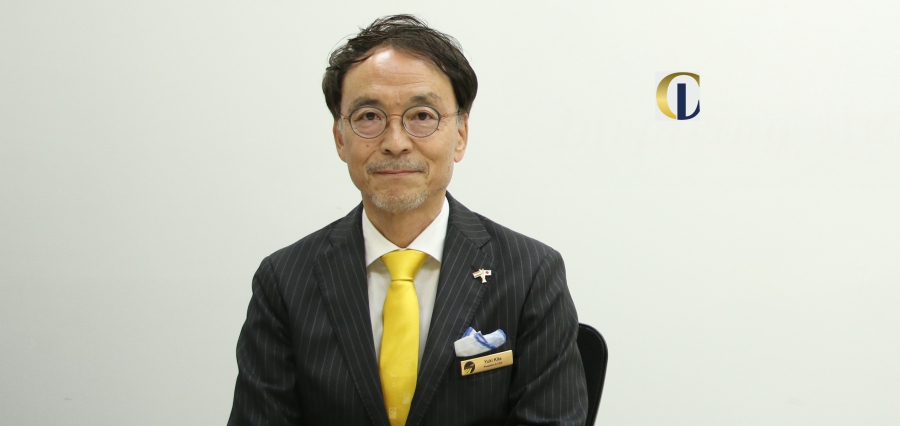
It is how forms FANUC India’s mission, as stated by Yuki Kita, President and Chief Executive Officer (CEO), “our mission extends beyond automation — it’s about enabling our customers to manufacture with confidence, consistency, and creativity. Robots are one of our core portfolios, but what truly differentiates FANUC ROBOT is the ecosystem around them: iRVision, Force Sensing, iRPickTool, ZDT (Zero Down Time), ROBOGUIDE simulation, and AI-based predictive analytics.”
In India, FANUC has already deployed advanced robot-based solutions across automotive, FMCG, white goods, logistics, and precision manufacturing, and it continues to strengthen local capability through engineering centers, technical training, and customer co-development programs.
The Next Frontier—Future is Always Now!
At FANUC, Yuki says, they’ve always believed that the true potential of automation lies in tackling unstructured, human-like challenges. “In India, our current frontier lies in automating complex, unstructured processes in manufacturing — such as robotic machining, additive manufacturing, and adaptive inspection systems.” These are far beyond traditional pick-and-place or palletising applications.
Through its FANUC iRVision and Force Sensor technologies, the company has already redefined precision assembly, adaptive grinding, and inspection in real-world Indian factories. These systems learn and adapt dynamically to changing part geometries or inconsistencies in material conditions — something once considered impossible for robots. “The next two years will see us move closer to fully autonomous manufacturing setups,” adds Yuki, where an intelligent FANUC ROBOT will self-optimize in real time, guided by data and learning algorithms.
An AI-Powered Robotics Advancement
AI is not new to FANUC; “It’s integral to our DNA. Our FIELD System (FANUC Intelligent Edge Link & Drive System) and ZDT (Zero Down Time) platform are already enabling predictive maintenance and adaptive process optimization across India’s shop floors,” informs Yuki. These technologies bring the convergence of data, machine learning, and robot intelligence right to the edge — where robots think, not just move.
In India, the company has deployed multiple systems where AI-based inspection and process correction are driven by FANUC iRVision combined with FIELD System analytics. The robots are evolving from task executors to autonomous decision-makers — predicting quality issues, adapting to changes, and ensuring continuous uptime. This integration of deep learning and industrial robotics represents FANUC’s pathway toward “smart factories with self-reliant robots.”
A New Era of Human-Robot Collaboration
Yuki assures that at FANUC, “We do not see robots as replacements for humans — we see them as enablers. Our CRX Series Collaborative ROBOT has been at the forefront of redefining safe and seamless collaboration.” These robots are built on three principles: safety, simplicity, and scalability.
In India, CRX ROBOT has already been deployed in flexible assembly, machine tending, and packaging applications — often working side-by-side with operators. Yuki explains, “We see the human-robot partnership evolving into a natural collaboration — where robots handle repetitive or hazardous tasks, while humans focus on creativity, analysis, and decision-making.” In that regard, FANUC’s strategy is simple: create robots that adapt to people, not the other way around.
Why FANUC India Treats Data as a Product
Every FANUC robot is a data generator, and every piece of that data has value. With the FIELD System and ZDT, the company’s customers can leverage machine data to achieve predictive maintenance, reduce downtime, and identify efficiency gaps before they occur.
“But we’re taking this further,” reveals Yuki. In India, he and his teams are developing localized data models that cater to the unique operational conditions of Indian industries — such as variations in power, temperature, and environment. These insights help factories shift from reactive maintenance to proactive optimization, translating directly into higher productivity and profitability.
At FANUC, data is not just an output — it’s an asset that drives transformation.
A Critical Point—Addressing the Talent Gap
“Automation doesn’t eliminate jobs; it evolves them,” insists Yuki. FANUC robots are creating new, high-value roles such as robot programming, digital maintenance, and system integration — enabling people to work smarter, not harder.
To support this evolution, FANUC India’s Technology Development Centre serves as a hub for learning, validation, and innovation. Engineers and customers gain hands-on experience with cutting-edge applications — from iRVision-based inspection to collaborative robots — ensuring skill growth aligned with industry needs.
“We also drive national skill-building through India Skills Support initiatives, partnering with government bodies and institutions to train young engineers in robotics and automation.” A highlight of this commitment is the FANUC Olympiad, a competition led by FANUC India that brings together top college teams across the country to solve real robot programming challenges. The Olympiad nurtures creativity, teamwork, and applied learning, inspiring the next generation of automation professionals.
Eliminating Barriers to Adoption
According to Yuki, the most significant non-technical challenge in automation today is change management — helping organizations transition from manual to robotic operations smoothly. “It’s not about technology alone; it’s about trust, ecosystem strength, and mindset evolution.”
At FANUC INDIA, they address this challenge by building an entire ecosystem that supports automation end-to-end. Beyond delivering world-class robots, they’ve developed a strong network of System Partners, Accessories Partners, and other Network Partners who bring specialized expertise in integration, tooling, vision, and connectivity. This ecosystem ensures that customers receive a complete, reliable, and future-ready solution tailored to their specific needs.
Yuki shares, “We also work closely with customers through every stage of their automation journey — from feasibility studies and simulation using ROBOGUIDE, to proof-of-concept trials, implementation, and Lifetime Service Support.” This collaborative model, rooted in their Customer First philosophy, enables organizations to adopt automation confidently and progressively.
“At FANUC INDIA, we don’t just sell robots — we build confidence, capability, and an ecosystem that makes automation sustainable for the long term.”
Innovations Powered by Ethical Design
“Responsible automation is a cornerstone of our philosophy,” emphasizes Yuki. At FANUC, they design robots that collaborate safely with people—ensuring technology enhances human potential rather than replaces it. Their global standards embody the principles of Reduce, Reuse, and Renewable, focusing on energy efficiency, long product life, and sustainable practices.
Every system they deliver adheres to the highest benchmarks of safety, environmental responsibility, and full traceability. Moreover, FANUC provides lifetime support for every product—ensuring service, parts, and expertise remain available as long as the customer continues to use it. Each innovation the team creates carries a moral obligation: to advance productivity responsibly and make human life better through sustainable, reliable automation.
“Our Strengths—Resilience and Customization”
The modern factory demands agility. FANUC ROBOTS are built on a modular, scalable platform, allowing rapid configuration changes without major retooling. With the R-30iB Plus Robot Motion Controller and ROBOGUIDE simulation software, customers can simulate, optimize, and validate entire production setups virtually before deployment.
Owing to their proven reliability and precision, the same FANUC ROBOTS can be redeployed across multiple applications, maximizing asset utilization and minimizing total cost of ownership.
In India, this flexibility has been instrumental in sectors like EV manufacturing, logistics, and electronics—where product variants evolve rapidly. FANUC’s adaptive automation enables customers to stay ahead of market shifts, transforming fixed lines into dynamic, intelligent production ecosystems.
The Digital Twin Advantage
When asked about the crucial importance of this tech, Yuki replies, “Yes, we are actively leveraging Digital Twin technology to bridge design and reality. With ROBOGUIDE, our virtual simulation environment, we can model, program, and optimize robotic systems before a single physical installation.”
This digital replication accelerates deployment time, minimizes integration risk, and enables predictive performance analysis. In India, FANUC has successfully implemented Digital Twin-based validation for several automation projects, cutting commissioning time by up to 30%. The future, according to Yuki, lies in connecting ROBOGUIDE with FIELD System analytics, enabling continuous synchronization between the virtual and real worlds — a living digital ecosystem of robots.
FANUC India’s Global Expansion Corridors
India’s industrial growth trajectory is shaping FANUC’s regional strategy, says Yuki. “While we continue to serve core sectors like automotive and general manufacturing, emerging opportunities in electronics, EV components, logistics, and food processing are accelerating automation adoption.”
Through close collaboration and technology transfer, FANUC helps Indian manufacturers evolve into globally competitive suppliers by enabling consistent quality, scalability, and process reliability through automation.
The company’s Technology Development Centre in India plays a pivotal role in this transformation — focusing on localized application engineering, pilot testing of advanced solutions, and seamless integration with FANUC’s global innovation ecosystem.
Amplifying Trust with Sustained Innovation
FANUC’s innovation model is built around consistency, collaboration, and continuous improvement. “Our R&D framework is deeply integrated across our global network — from Japan to the U.S., Europe, and India.”
In India, the company’s Technology Development Centre contributes to localization efforts, digital validation, and the development of new robot applications tailored to Indian customers. By combining global technologies like iRVision, CRX, ROBOGUIDE, ZDT, and FIELD System with India-specific requirements, “we ensure innovation that is both state-of-the-art and relevant.”
Yuki further states, “Our philosophy remains unchanged: Reliability through Technology, and Simplicity through Innovation.”
The 2026 Legacy of FANUC India
By 2026, Yuki believes FANUC will be recognized for transforming the industrial landscape by making automation simpler, smarter, and more accessible. “We will have helped India move from automation ‘adoption’ to automation leadership — where robots are integral to every stage of production, analysis, and optimization,” he commits.
FANUC’s legacy will be defined not by the number of robots installed, but by the confidence and capability it builds among customers. With its 23 regional offices, widespread service network, and in-house repair infrastructure, backed by its expert trained engineers, FANUC INDIA ensures that customers experience its Service First commitment in a swift and dependable manner.
“At the core of our journey lies one unwavering principle: Customer First — Always.”
That is the foundation on which every FANUC product operates.
Ensuring A People-Centred and Robot-Assisted Progressive Tomorrow
“At FANUC INDIA, we believe that automation must be reliable, feasible, and accessible. Our robots are not just machines — they are partners in productivity, powered by AI, guided by vision, and backed by data,” says Yuki.
“Through every deployment, training session, and technical innovation, we reaffirm our promise: to place the customer first, deliver technology that lasts decades, and create value that endures generations,’ he reiterates.
That is the FANUC way — globally consistent, locally committed, and relentlessly focused on making automation human-centric, intelligent, and future-ready.
Finally, Yuki welcomes you to join FANUC India at the upcoming ‘IMTEX Forming 2026’ exhibition to experience their cutting-edge technology live.