Engineering has always been about long-term pragmatic vision, a trustworthy commitment, foundational endurance, an ever-evolving durability, and creating possible solutions when and where there existed none before. Engineering companies possessing these qualities are rare and have earned not only a reputation of being the most followed ones but also the companies that are trusted by the people at large.
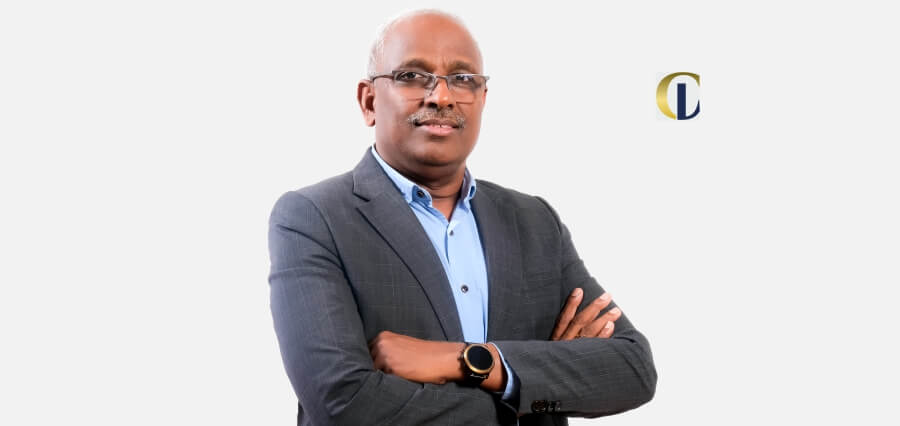
MFAR Constructions Pvt Ltd is a gem amidst this league. In an era focused on modern infrastructure, that trust is the cornerstone of MFAR’s relationships with clients, partners, and communities. According to the Chief Executive Officer (CEO), Dr. Zakir Hussain Shaik, in an industry built on long-term commitments, they define trust equity as the consistent delivery of quality, safety, and transparency across every project they undertake. Since their inception in 1996, they’ve earned this trust by combining engineering excellence with ethical governance and a deep sense of accountability.
He adds, “Our ISO 9001, 14001, and 45001 certifications reflect our unwavering adherence to international standards in quality, environmental care, and occupational safety.” For government and institutional clients, this translates into reliability, compliance, and predictable outcomes. The company maintains transparency through open communication, timely delivery, and robust project management systems.
A Transparent Operational DNA
In an era of intense public scrutiny, transparency and integrity are embedded in MFAR Constructions’ operational DNA and reflected through its Integrated Management System, aligned with ISO 9001, ISO 14001, and ISO 45001 standards. A well-defined framework of fair bidding, ethical governance, and compliance auditing guides its procurement and vendor selection policies. Every supplier and subcontractor undergoes a rigorous evaluation process based on quality, reliability, safety compliance, and environmental responsibility. The company leverages digital procurement platforms and standardized documentation to ensure traceability, accountability, and audit readiness across all transactions.
Globally, MFAR’s approach emphasizes a “zero-tolerance policy” toward any conflict of interest or malpractice, reinforced by periodic training and internal reviews. “Our vendor relationships are built on mutual trust, transparent pricing, and shared values of sustainability.” This disciplined governance model not only safeguards MFAR’s integrity but also strengthens stakeholder confidence—ensuring that every project it delivers stands as a testament to ethical excellence and professional credibility.
Client Feedback Refined Projects Improvement
At MFAR Constructions, continuous quality improvement is a strategic discipline rooted in client collaboration and data-driven project evaluation. Dr. Shaik ensures they treat every client engagement as a long-term partnership and actively integrate feedback mechanisms at multiple project stages—from design reviews to post-completion audits. “This ensures that client insights directly inform our engineering refinements and process optimization.”
Systematic project audits, conducted under its ISO 9001-certified Quality Management System, assess adherence to specifications, safety standards, and delivery timelines. Its internal review committee analyzes the findings to identify improvement opportunities in planning, material selection, construction methodology, and technology deployment. These insights are then translated into updated Standard Operating Procedures (SOPs) and shared through team-wide learning sessions.
This structured loop of feedback, auditing, and training allows MFAR to stay agile, enhance efficiency, and reinforce its reputation for precision, reliability, and innovation—ensuring every subsequent project exceeds prior benchmarks of excellence.
TechnOptimization
Also, at MFAR Constructions, Dr. Shaik says they view technology as the cornerstone of next-generation construction excellence. “Our current and measurable investments are directed toward Building Information Modeling (BIM), digital twin technologies, and AI-driven project analytics, enabling seamless integration between design, execution, and facility management.” By adopting digital twin simulations, they can visualize real-time project dynamics—predicting potential design conflicts, optimizing resource allocation, and pre-emptively mitigating risks before they reach the site.
Additionally, they are piloting generative AI tools for design optimization and predictive safety monitoring, using historical data to enhance project sequencing and workforce safety compliance. These innovations are backed by substantial capital outlay in software, in-house training, and strategic collaborations with global technology partners.
Through these focused investments, MFAR is not just digitizing construction but transforming it—enhancing precision, accelerating delivery timelines, reducing rework, and ensuring that every structure they build reflects the future of intelligent, safe, and sustainable engineering.
Strategic Alignment with the Global Shift
Furthermore, MFAR Constructions is strategically aligning its engineering capabilities with the global shift toward decentralized, resilient, and sustainable infrastructure systems. Dr. Shaik informs that their design philosophy now emphasizes modular construction, adaptive reuse, and integrated smart technologies to create structures that are flexible, scalable, and future-ready. By adopting prefabrication and system formwork techniques, they reduce construction time, resource dependency, and on-site environmental impact—key elements of resilient infrastructure.
They are also collaborating with urban development partners to integrate micro-mobility infrastructure, green corridors, and smart utility grids into their large-scale projects, ensuring seamless alignment with emerging city ecosystems. “Our engineers continually upgrade design models using BIM and digital simulation tools to account for distributed energy systems, climate adaptability, and rapid urbanization challenges.”
Through this forward-looking approach, MFAR reinforces its commitment to building infrastructure that not only supports today’s needs but anticipates tomorrow’s urban transformations—resilient, efficient, and technologically adaptive.
The Advanced R&D Pipeline
Also, at MFAR Constructions, its R&D pipeline is increasingly inspired by advances in bioengineering and material science, two non-traditional sectors that are redefining the future of construction. The company is exploring bio-inspired materials and self-healing concrete technologies that emulate natural processes to enhance structural durability and reduce maintenance cycles. These innovations align perfectly with our sustainability vision, enabling longer life cycles and lower environmental impact across projects.
By integrating learnings from these frontier domains, MFAR aims to stay ahead of conventional engineering practices. “Our focus is not merely on adopting technology, but on translating scientific innovation into practical, scalable construction solutions that deliver tangible performance, sustainability, and value to clients.”
A Sustainability-driven Excellence
MFAR Constructions recognizes that the next wave of engineering excellence lies in sustainability-driven specializations such as carbon capture, green hydrogen, and circular construction systems. To attract and retain top talent in these fields, the company has built a multi-pronged strategy that combines academic collaboration, innovation culture, and career purpose.
Dr. Shaik shares that they partner with leading universities and research institutions to create joint fellowship programs and industry-led projects that expose emerging engineers to real-world sustainability challenges. Internally, MFAR’s Innovation and Knowledge Centre serves as a sandbox for experimentation in green materials, renewable energy integration, and digital construction. Young engineers are encouraged to lead pilot initiatives, file patents, and participate in global technical forums.
Retention is driven by our mentorship ecosystem, transparent growth pathways, and a culture that rewards curiosity and impact. By aligning engineering careers with global sustainability goals, MFAR ensures its talent pool remains passionate, future-ready, and deeply invested in transformative infrastructure.
Ensuring Knowledge Continuity
Moreover, he adds that at MFAR Constructions, they view knowledge continuity as a strategic asset essential for sustaining excellence across generations. To prevent skill and expertise gaps, especially in complex legacy sectors, we have institutionalized a Structured Knowledge Transfer (SKT) Framework that combines mentorship, documentation, and digital collaboration.
Senior engineers are formally paired with junior teams through project-based mentorship programs, ensuring that tacit knowledge—ranging from risk anticipation to on-site decision-making—is transferred in real time. These engagements are supported by codified technical manuals, design repositories, and digital learning modules, all housed within MFAR’s centralized knowledge management system.
The team also conducts post-project reviews and technical symposiums where experienced professionals share best practices, innovations, and lessons learned. This systematic, multi-layered approach ensures that every engineering insight gained over decades becomes part of MFAR’s institutional DNA—bridging generational expertise and preserving the precision, safety, and innovation that define our engineering culture.
A Client Trust Index (CTI) Metric
At MFAR Constructions, while financial strength is vital, the most critical non-financial metric the leadership team relies on is Client Trust Index (CTI) — a composite measure reflecting long-term stakeholder confidence, project satisfaction, and brand credibility. “This metric integrates client feedback scores, repeat business ratios, safety performance, and environmental compliance outcomes to assess our organizational integrity beyond numbers,” reveals Dr. Shaik.
CTI directly mirrors how consistently they deliver on their core values of Quality, Safety, Speed, and Modernization, and how effectively they uphold ethical governance and environmental stewardship, he adds. “Regular internal reviews and external audits provide a transparent pulse on these parameters, helping us identify areas for cultural and operational enhancement.”
By prioritizing trust, reputation, and stakeholder relationships as key indicators of success, MFAR ensures that every project contributes not only to physical infrastructure but also to the enduring social and ethical foundation upon which the organization is built.
The Core Design Philosophy
At MFAR Constructions, sustainability is not treated as a compliance requirement—it is embedded as a core design philosophy guiding every stage of our projects. “We are actively transitioning from regulatory adherence to proactive Net-Zero and circular economy integration, beginning at the conceptual design phase.” The engineering teams collaborate with sustainability consultants to incorporate low-carbon materials, renewable energy systems, water recycling loops, and waste-to-resource models into project blueprints from the outset.
Through Life Cycle Assessments (LCA) and digital simulation tools, they evaluate the carbon footprint of every structural component before execution, enabling data-driven decisions that align with their Net-Zero roadmap. Additionally, the procurement framework prioritizes suppliers adhering to circular material recovery and green manufacturing practices.
By embedding these principles into its design DNA, MFAR is building infrastructure that regenerates value—minimizing waste, maximizing efficiency, and ensuring every project contributes tangibly to India’s low-carbon future.
Solving an Ethical Dilemma
Then Dr. Shaik shares something crucial. “One of the most pressing ethical dilemmas we foresee over the next three years lies at the intersection of large-scale infrastructure expansion and local community rights, particularly concerning land use, displacement, and equitable resource access.” As urbanization accelerates, balancing development imperatives with social equity will remain a moral and operational challenge.
At MFAR Constructions, the approach is grounded in ethical foresight, stakeholder dialogue, and participatory planning. Before initiating any major project, the team conducts Social and Environmental Impact Assessments (SEIA) in collaboration with local authorities, NGOs, and community representatives. These assessments help identify vulnerable groups and ensure that rehabilitation, livelihood restoration, and cultural preservation are prioritized alongside technical feasibility.
They are also investing in inclusive design frameworks, employing local workforce participation and skill-building initiatives to create shared value. For MFAR, ethical construction means not just minimizing harm but actively enabling social upliftment—ensuring development strengthens communities rather than displaces them.
A Catalyst for the Constant Social Progress
Finally, at MFAR Constructions, Social Return on Investment (SROI) is a critical metric used to evaluate how its projects translate into tangible, equitable, and sustainable community outcomes. “We go beyond traditional cost–benefit analysis by measuring the long-term socio-environmental impact of our developments across four key dimensions—livelihood generation, community well-being, environmental resilience, and inclusivity,” shares Dr. Shaik.
Each project undergoes an SROI assessment framework aligned with global ESG benchmarks and India’s Sustainable Development Goals. They quantify social value through measurable indicators such as local employment created, skill development hours delivered, carbon footprint reduction, water and energy savings, and improvement in community infrastructure. Independent audits and stakeholder surveys validate these findings to ensure objectivity and accountability.
By institutionalizing SROI as a performance metric, MFAR ensures that every project is not only an engineering achievement but also a catalyst for social progress, empowering communities and fostering sustainable regional development.